Category: Subh_Invest

  • Financial Literacy for Women

    Financial Literacy for Women

    Money Matters: Why Financial Literacy is Important for Women

    Women have always been in charge of the household finances. Still, in recent years they have taken on more financial responsibility outside the home. Financial literacy is important for women because they need to manage their own finances and understand financial concepts to make sound financial decisions. Unfortunately, women are more likely than men to face poverty after retirement. A big reason for this is that women tend to live longer than men. But another factor is that women earn less over their lifetimes and have fewer opportunities to save for retirement.

    But there’s good news: Women can catch up by taking courses, reading books or articles, or working with a financial advisor. And the sooner they start, the better. Yet most women are in a huge time crunch, so it s difficult to find an hour or two to learn about money. To ease this issue, we’ve created a list to help women with financial literacy.

    Financial Literacy for Women: Why It is Important

    As the world progresses, more and more emphasis is placed on financial literacy. This is true for women, who have historically been at a disadvantage when it comes to money matters.

    There are various reasons why financial literacy is crucial for women. For one, women tend to live longer than men, which means they need to be prepared for a longer retirement. Additionally, women are more probable to take time out of the workforce to care for children or elderly family members. Unfortunately, this can make it challenging to save for retirement or build up enough credit to get a loan. Another reason financial literacy is so essential for women is that they are often the ones in charge of household finances. Even when they don’t earn as much as their male counterparts, they are typically responsible for managing the budget and paying the bills.

    Financial Literacy for Women: How to Get Started

    Women are less financially literate than men, and this lack of financial literacy can hurt women throughout their lives. Financial literacy is important for women because it can help them make better decisions about their money, understand their rights and responsibilities when it comes to personal finance, and avoid financial exploitation.

    Women can do a few things to start becoming more financially literate. First, they can educate themselves about basic financial concepts like budgeting, saving, and investing. Second, they can seek out resources like books, websites, and articles that provide information about personal finance. And finally, they can talk to someone they trust about money matters to get advice and guidance.

    Becoming financially literate doesn’t have to be difficult or time-consuming.

    Financial Literacy for Women: Tips for Saving Money

    While there are multiple ways to save money, here are a few tips that can help women get started on the path to financial literacy:

    1. Know where your money is going:

    Track your monthly spending and see where you can cut back. There’s no need to deprive yourself, but small changes can make a big difference over time.

    2. Define a budget and stick to it:

    Determine how much you need to save each month and set up a system that works for you. Whether it is setting aside cash in envelopes or transferring money into a dedicated savings account, make sure you’re disciplined about sticking to your plan.

    3. Invest in yourself:

    Whether pursuing higher education or taking a course, investing in your future is important. Your financial decisions can affect your quality of life and the people around you.

    4. Get out of debt:

    If you have credit card debt, education loans, or any other type of debt, the sooner you start working to pay it off, the better.

    5. Don’t forget about your retirement:

    The Sooner you start saving for retirement, the better off you’ll be when you’re no longer working.

    Financial literacy is a key skill for women to possess to maintain financial stability. With knowledge of personal finance, women can make informed decisions about spending and saving, which can lead to a bright financial future. Despite the stereotype that math is a man’s subject, financial literacy is not gendered; it is something that everyone should learn. When it comes to money, everyone can benefit from being financially literate.

    This blog is purely for educational purposes and not to be treated as personal advice. Mutual funds are subject to market risks, read all scheme-related documents carefully.


  • Retirement Fund Vs National Pension System

    Retirement Fund Vs National Pension System

    Retirement Mutual Fund Vs NPS: Which one is better for you?

    After retirement, life offers fresh experiences. It is time you start enjoying your life stress-free. But it can only happen if you have sufficient funds, as working in old age seems a little overwhelming. If you plan your retirement well during your working years, you will worry less and enjoy more.

    Currently, different investment options can help you to plan for your retirement. But in this article, we will look at the two investment options: Retirement Fund and National Pension System.

    What is a retirement mutual fund?

    A retirement mutual fund is a solution-oriented mutual fund that aims to help people plan for their retirement. Typically, these funds invest in a mix of assets such as equities and debt. These funds come with three plans with different asset allocations. The aggressive plan has a higher equity exposure and is more suited for young investors. On the other hand, the conservative plan has the lowest equity exposure for investors close to their retirement.

    Advantages of retirement funds:
    The lock-in period of five years or until retirement age (whichever comes first) can assist you in staying focused on your retirement plan.

           You can take advantage of automatic rebalancing of your portfolio by switching between different plans.

           It takes into account the changing risk tolerance levels and fluctuating levels of comfort that investors have with risk

    What is NPS?

    The National Pension System(NPS) is a scheme launched by the government of India to benefit employees in the public/private sector, including the ones in the unorganized sector. Individuals can contribute a minimum of Rs.6000 per annum in one go or Rs.500 every month.

    The scheme matures at 60 years of the subscribers and may be extended to no more than 70 years. In specific situations, subscribers can withdraw up to 25% of the money invested after three years of opening an NPS account.

    Benefits of NPS:
    Comes with tax-deduction benefits

           Government-backed scheme

           Ease of access

    Retirement fund Vs NPS

    Though the objectives of both schemes may be similar, they have basic differences. Let’s discuss them.

    Equity Exposure

    In the case of retirement funds, the equity exposure of the aggressive plan of the fund is the highest. The maximum equity allocation of these plans depends on the respective fund house. So, there is no mandated maximum equity exposure.

    However, in the case of NPS, the maximum equity exposure permitted is 75% up to 50 years under the active choice.

    Investment plans:

    Retirement funds come with three plans. Investors can choose the plan that best suits them, and the fund manager takes the investment decisions.

    While in NPS, you have two choices: auto choice and active choice. In auto choice, a manager is appointed to take care of your investments, while in active choice, you’re free to choose different types of investments as per your requirements.

    Taxation

    Currently, there are no tax benefits for investing in a retirement mutual fund.

    However, in the case of NPS, investments up to Rs.1.5 lakhs come under section 80C. In addition, an additional amount of Rs 50,000 is exempted. This means that a total of Rs 2,00,000 per year is exempted from tax under NPS. The NPS falls under two sections: 80CCD (1) and 80CCD (1B).

    However, after retirement, the income from annuities is applicable to tax.

    Withdrawals

    Investors can redeem their investments after five years or when they turn 60. However, withdrawal from NPS is only allowed under special circumstances. Under regular circumstances, when a subscriber becomes 60 or reaches the age of superannuation, they must spend at least 40% of the total pension fund to buy an annuity that would pay a regular monthly income. The remaining money is available for lump sum withdrawal.

    Which is a better option: retirement funds or NPS?

    When it comes to investments, you must remember that no investment is right or wrong. Any investment that aligns with your financial goals is perfect for you. If you have pre-set retirement goals like traveling the world, retirement funds may be an ideal option for you. For example, you can invest in equity instruments that would generate relatively higher returns but do not forget they come with a little high risk too. NPS may be ideal for individuals who want a fixed monthly income after retirement.

    However, it is best to consult a financial expert while making long-term financial decisions.

    This blog is purely for educational purposes and not to be treated as personal advice. Mutual funds are subject to market risks, read all scheme-related documents carefully.

  • What is inflation?

    What is inflation?

    What is inflation?

    Inflation refers to the hike in the prices of goods and services in an economy over time. The hike in prices signifies that purchasing power of the currency reduces or fewer goods and services can be purchased with the same amount of money.

    Consumer demand and money supply affect inflation in the long run. Consumer demand may arise due to factors like an increase in population, an increase in money supply, etc. A rise in consumer demand means a rise in inflation.

    Money supply can affect inflation too. Increased money supply means people in an economy have increased spending power leading to more demand than supply. To meet the increasing demand, prices rise, and inflation occurs. Other factors affecting inflation are cheap monetary policy, deficit financing, and a rise in black money.

    How to Stop Inflation from Eating your Money?

    Rising inflation is a painful reality. It hurts whenever the shopkeeper asks to pay a few extra bucks for the same thing. Surprisingly, the annual Inflation rate in India has surged to 7.79% in April 2022. Food inflation raised to 8.38%, a new record since November 2020. Retail inflation has been rising since September 2021 and reached 6.07% in February 2022.

    But what exactly is inflation? Is inflation bad for an economy? How can inflation eat up your money? Most importantly, what can you do about it when it is not in your hands? Is it possible to generate wealth in times of rising inflation?

    Let’s seek answers to all these questions in the blog.

    How can inflation eat up your money?

    Rs 1,00,000 saved in your locker today won’t be equal to Rs 1,00,000 at the end of the year because inflation eats a part of your money.

    If you keep your money in bank FDs or savings accounts, you get returns that’ll cover some effect of inflation, but your money won’t grow to the level that it outgrows inflation.

    Investments with fixed annual interest rates, such as bonds, get affected by inflation adversely. Since you earn fixed returns every year, rising inflation will erode the value of returns each passing year. Investments with market-linked returns, such as equities, can outgrow inflation when markets are rising. But inflation rises as the market grows, and company’s profits decline as they have to pay more wages. Hence, it depends on the company’s performance.

    How do you plan for inflation?

    You can not control inflation because it’s not in your hands. But you can plan your finances so that your money doesn’t lose its value as inflation rises.

    Due to the negative impact of inflation, experts advise not to keep all your money in bank FDs or saving accounts. When the inflation is higher than the returns, the returns that you get on Rs 100 investment will not be equal to Rs 100 tomorrow. This is because the 3-4% returns won’t cancel the effect of 6% inflation.

    Instead, plan to invest in investments that generate good returns over time, like equity mutual funds through SIP. These funds help beat inflation due to the compounding effect if you keep investing monthly, quarterly or yearly for several years. Moreover, these funds lead to wealth accumulation over time.

    Investors who can’t take the high risks that come with equity investment can invest in debt mutual funds. If one stays invested in a debt fund for more than three years, the capital gains from the debt funds are taxed after indexation.

    Indexation is a method of adjusting an investment’s purchase price to account for inflation. A greater purchase price implies lower profits, resulting in a lower tax rate.

    Indexation allows you to reduce your long-term capital gains, lowering your taxable income. Compared to traditional fixed deposits, debt funds are an excellent fixed-income investing alternative because of indexation.

    The solution lies in the diversification of assets. Investing in a mix of different assets such as equities (domestic and international), debt, and gold to match the investor’s risk profile can help decrease the risk and optimise returns, thus beating inflation.

    Conclusion:

    Inflation isn’t a curse for a country. However, investors should reconsider their investment portfolio and invest in various assets across different types, industries, and countries when inflation rises beyond expectations. Hence, diversification is the only solution.

    This blog is purely for educational purposes and not to be treated as personal advice. Mutual fund investments are subject to market risks, read all scheme-related documents carefully.

  • How can millennials start saving?

    How can millennials start saving?

    How can millennials start saving?

    Investing seems like rocket science for a millennial, but it’s not. So let’s understand who millennials are? Millennials belong to that age group who were born between 1981 and 1996.

    There were times when savings were the priority, and taking debt was like a sin. Nowadays, easy access to loans makes a millennial spend over their means. Spending influenced by social media, looking rich rather than being rich, or insecurity regarding jobs could be the reasons behind spending without a budget. Savings and investments must be a part of their lives, as taking excessive risks may not be an option after a few years.

    There are a few tips on how a millennial can start investing their hard-earned money;

    Live within your resources

    Irrespective of your monthly paycheck, you need to limit your expenses within your resources. You may use credit cards during emergencies, not for fulfilling your wants.

    However, buying things on EMI is common these days. Using excessive EMIs options may affect your credit score adversely as the future is fully unpredictable. If you cannot pay your EMIs, it will become debt stress for you and your family.

    For example, if your salary is around Rs.20,000 per month, you want to buy a mobile phone for Rs.50,000. Taking the plunge might not be wise if you haven’t saved for it. It may satisfy your social status cause, but debt stress may destroy your peace.

    Apply 50:30:20 rule

    It is a wonderful budget rule for managing personal finance and might help imbibe the habit of budgeting and savings. You may take the help of such a rule to make your finances stable and alter the ratios according to your needs and financial objectives.

    According to this budget rule:

    You can spend 50% of your income on the basic necessities, i.e., unavoidable expenses, like-

    • Rent
    • Grocery and Utility Bills
    • Children’s education fee

    You may spend 30% of your income on your wants. Recreation is part of a happy life. You can spend 30% of your income on these expenses, like;

    • dining out with family,
    • trips with your friends and family, and
    • buying gadgets under your budget.

    Basically, it includes those expenses that are beyond necessities.

    You can invest 20% of your income. It will help you get returns to hedge the prevailing inflation in the country.

    The most essential and valuable feature of such a rule is individuals can use it irrespective of their gross income. Moreover, you can personalise the ratio as per your needs and financial objectives.

    As per your risk tolerance and financial goals, you can start investing in mutual funds through a systematic investment plan (SIPs).

    Buy a health insurance policy

    Changing eating habits, increasing pollution, adapting comfortable lifestyles, and passing genetic diseases are enough reasons to be financially aware and buy health insurance. An early health insurance plan is necessary for millennials as health insurance plans cover pre-existing conditions after a lock-in period of 2 to 4 years.

    Creating emergency fund

    Data represents that most of us are not prepared for emergencies like the Covid-19 pandemic. According to a report on Business Line, 21% of Indians claim to have taken on more debt to cover expenses during a pandemic. An emergency fund of 3 months of expenses is essential to tide over unpleasant surprises of life such as job loss or healthcare crisis.

    However, the ideal amount in the emergency fund may vary with liabilities, financial responsibilities and the risk of losing the job. You may increase your emergency fund amount by analysing your current financial situation.

    Start a Systematic Investment Plan (SIP)

    One of the many ways to start your investments is with SIPs. SIP is a method of investing in mutual funds in which you invest a particular amount in a mutual fund scheme to generate a reasonable return. You need to shortlist the type of fund such as equity-oriented, debt-oriented, or hybrid schemes that you want to invest in. You must decide your risk tolerance capacity and financial objective of investing such money.

    Conclusion

    You can start investing by following the points mentioned above. Living within your means, investing in a disciplinary manner, creating emergency funds as per your requirements but for at least three months of expenses, and following budget rules is no rocket science.

    This blog is purely for educational purposes and not to be treated as personal advice. Mutual funds are subject to market risks, read all scheme-related documents carefully.
  • 5 Elements That Affect Asset Allocation

    5 Elements That Affect Asset Allocation

    5 Elements That Affect Asset Allocation

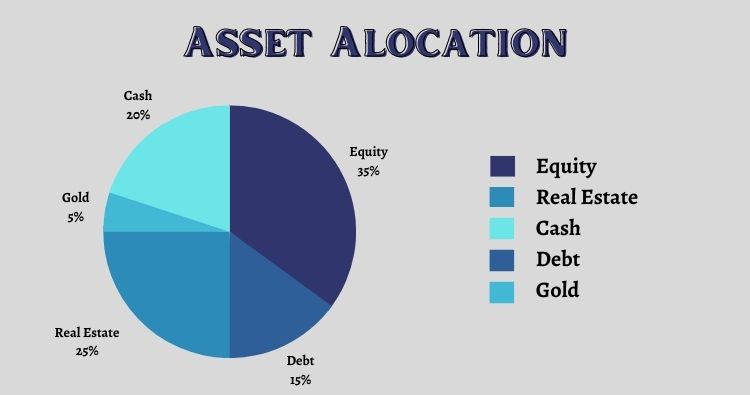
    Asset allocation is like the art of cooking. And just like with cooking, there are numerous elements such as the recipe, the ingredients you’re using, and external factors that affect your end product. This blog post will discuss six elements that affect our asset allocation. We will discuss why you should consider these five elements before allocating your assets.

    What is asset allocation?

    There are different types of assets, and all assets don’t move in the same direction. For example, if the equity markets are falling, gold prices typically move up as stock prices and vice versa. It is because stock prices go up when the market is optimistic, and gold prices rise when it is pessimistic.

    A proper asset allocation is necessary to get optimum returns from your investments. And this is where the concept of asset allocation enters. By investing in different classes of assets in the market, you can take reduce your portfolio risk.

    Let’s understand some elements that affect asset allocation.

    1.Age

    Age is an essential element that affects asset allocation while investing in an instrument. For example, if you are a millennial, which means you are at the age of 20-35, you may have a high-risk tolerance as you have a long life ahead to achieve your long-term goals.

    Similarly, if your age is between 35-55, you may have a moderate risk profile to invest in risky products. You may have already achieved your long-term goals and are willing to accomplish a few short-term objectives. And individuals aged more than 55 years may prefer the least riskier investment.

    2.Income

    Income is another element that needs to be considered while deciding on asset allocation like job security, employed or unemployed, consistency in cash flow matters. If you are a salaried employee, you can systematically invest in different assets. But if you have a business, you may need to carry out asset allocation in a way that best suits you. If your income status changes, you can revise the asset allocation breakup to suit your current scenario.

    3. Time horizon

    Your investment horizon is another feature of your asset allocation. If you are looking forward to investing in a short-term financial goal, you can invest in fixed-income securities like fixed deposits and short term debt funds.

    On the contrary, if you are planning to invest in a long-term instrument, you may invest in equities as it has the potential to deliver higher returns over the long term.

    4. Risk-tolerance

    The amount of risk you can take with your money also impacts your asset allocation.

    Risk-taking capacity can be divided into three parts:

    • Aggressive
    • Moderate
    • Conservative

    Risk profile depends on your willingness to take the risk for your hard-earned money. Investing in stock markets are subject to market volatility risk. If you cannot bear the short term volatility in the equity markets, you can look at investing in debt instruments.

    5. Dependents and Liabilities

    Liabilities also play an essential role in determining your asset allocation. It is because your liabilities influence your risk-taking capacity and financial goals. For instance, a 25-year old who lives with parents and doesn’t have any liabilities may easily invest 90% of the income in equity funds. However, the same may not hold for a person who is the family’s sole earning member. They might be more interested in saving money for emergencies or any short-term requirements.

    Conclusion

    Analyzing these factors can be proven helpful in allocating your assets while investing in different asset classes. We can see that these five factors are related to each other. You can determine the time horizon by deciding on your financial goals, your number of dependents and your age can help you understand your risk profile, and so on. It is essential to evaluate each element that may affect your assets allocation and investment category.

    This blog is purely for educational purposes and not to be treated as personal advice. Mutual fund investments are subject to market risks, read all scheme-related documents carefully.

  • How To Become Financially Literate?

    How To Become Financially Literate?

    How To Become Financially Literate? 

    Have you ever come across the term “financial literacy”? Does the term sound complicated to you? Do you consider yourself financially literate? 

    In this blog, we will learn about financial literacy, why it is important, and how to become a financially literate person. 

    Simply put, financial literacy is understanding your finances. It involves learning money management skills, keeping track of your expenses, learning concepts of investing and borrowings and making wise decisions.

    Why is financial literacy important? 

    Financial literacy is a crucial skill in today’s era. You cannot solely focus on earning money and expect your money to grow over time if you are unaware of how to manage it well. Hence, financial education is vital. 

    Here’s why financial literacy is important: 

    ● It helps expand your knowledge in the finance field and make wise decisions in life

    ● Assist in understanding financial concepts like debt, interest rates, credit scores etc

    ● Aids in reaching one’s financial goals

    ● Protects you from frauds like online scams

    ● Increases your confidence in life

    Best ways to become a financially literate person

    Learn financial jargon

    You cannot expect to understand advanced English if you don’t know the basics. Similarly, to learn and comprehend technical and financial concepts, you need to understand the basic terms like debt, asset, liability, capital, equity, depreciation etc. 

    Learn about budgeting 

    You must have heard from people like budgeting isn’t needed, or you need solely to focus on earning more, but that’s not true. It is vital to know where your money is coming from and where it is going. You must have a record of every penny earned and spent. This will help you in reducing unnecessary spending habits.

    Understand saving and investing

    A lot of people want to retire early, but earning more money doesn’t necessarily mean you’re getting wealthier. Usually, when a person earns more, they spend more. It is important to lower expenses and find ways to save money to become wealthy over time 

    Understanding credit

    You must know what credit is and how it works, as credit is an essential part of life. Your credit history reflects your creditworthiness. You must learn some common concepts about credit, such as the importance of credit and how to improve your credit score. 

    Get help from finance experts

    Once you have gained enough knowledge about the basics, it is time to talk to experts who specialize in the specific field. Financial experts can help you in managing your debt and finances better and assist you in reaching your end goals. Having ample knowledge provides you with relevant questions to ask experts. 

    Final thoughts

    Now that you know what financial literacy is and its importance in one’s life, you must know the actual learning lies in execution.

    This blog is purely for educational purposes and not to be treated as personal advice. Mutual funds are subject to market risks, read all scheme-related documents carefully.

  • Where can debt fund investors invest?

    Where can debt fund investors invest?

    Where can debt mutual fund investors invest in a rising interest rate scenario?

    The Reserve Bank of India, in its bi-monthly monetary policy held in June, hiked its key interest rate by 50 bps. This comes on the back of a 40 bps hike done between the policy meet, taking the total hike of interest rate to 90 bps in five weeks. One basis point is equal to 1/100th of 1%. 

    The central bank has also hinted at more rate hikes in the coming months to counter high inflation in the economy. 

    This means that the rising yields of domestic fixed income instruments are expected to rise in the future. Yield is the returns that investment brings in over a certain amount of time. It is shown as a percentage of the amount invested, the value of the security on the market. 

    Debt mutual fund investors are sitting on massive losses since interest rates are at a historic high. This raises the question of where to invest debt funds in a rising interest rate scenario and how should they invest in this environment. 

    Let us know more. 

    Yield versus price problem 

    The first and the most fundamental thing that debt mutual fund investors should understand is that we cannot compare the lateral movement of yield rise with the equity market. In the case of a rise in yields, there is an inverse relationship with the price of the underlying debt security prices. So when yields rise, they rise because the price of the securities has fallen, and vice versa when yields fall. 

    So, in the current situation, the price of securities has fallen as yields have risen. However, there is a disproportionate change in prices and yields across maturity of debt securities. For instance, long-maturity papers become unattractive during such times as investors are locked in for a long duration in such securities. Thus their prices fall more steeply compared with short maturity papers as these will mature sold. Thus new securities with higher yields can be bought in their place to spruce up the portfolio returns.

    Investments in short maturity debt funds turn attractive

    As explained above, short-term debt securities thus are less affected by the yield rise and thus can turn out to be an attractive opportunity for investors in the debt space. An investor can take exposure to space by investing in short-term debt mutual funds and money market funds since these funds invest in short-term papers.

    Floating rate debt funds

    This fund can also prove to be an attractive investment opportunity for debt fund investors. Floating rate debt funds invest in securities and structured papers that reset the yield basis the underlying environment and covenants. Thus they are ably placed to provide a higher yield to the portfolio. 

    Dynamic bond funds

    Investors who believe that the central banks might not raise interest rates much or would not want to juggle their portfolios regularly as per the changes in the interest rate environment can look at the dynamic bond fund category. These funds, as the name suggests, dynamically alter the portfolio maturity (underlying set of securities) basis the changing situation and thus can move across the yield and duration curve. Therefore, investors do not have to look at moving across various debt fund categories.

    Summing up 

    Debt mutual funds provide various options for investors to invest basis their risk-return profile and investment horizon. Investors looking to invest in the short to medium term can invest in debt mutual fund categories outlined in the article above to benefit from the rising interest rate scenario. These funds can not only generate better returns than the traditional fixed income instruments but also give better tax-adjusted returns through indexation benefits for investments beyond three years horizon. It is, however, important to do due diligence before investing. You can contact us to know the suitable debt fund schemes based on your requirement.

    This blog is purely for educational purposes and not to be treated as personal advice. Mutual fund investments are subject to market risks, read all scheme-related documents carefully.

  • Why can’t we stick to our budget plan?

    Why can’t we stick to our budget plan?

    Why can’t we stick to our budget plan?

    Did you know that the word budget comes from the French word ‘bougette’, which means a small leather purse? While most of you would not have known the antiquity of the term, most of you would understand the concept of budget, which is a financial plan of income and expenses over a specified period. The problem, however, is that most of us cannot stick to our budget plan as we might like. In this article, we try to understand the primary reasons for this mismatch and hopefully learn from these mistakes and improve our budgeting skills.

    Mistakes in budgeting

    The first and foremost mistake that most of us make is that we do the budgeting incorrectly. Most of this would be on the expense side. For instance, you might forget that you have an upcoming payment towards insurance that is not accounted for in the expenses. Similarly, you may decide to take a spur-of-the-moment trip with your friends and family, which throws your budget into disarray. There might be some mistakes in accounting for your income as well. Some of the major ones could be not accounting for the tax deducted from your income, especially for salaried individuals.

    Thus, you must get your budgeting right cause that’s the foundation of your budget, failing which the entire plan goes topsy turvy. It is like the quote from Aristotle, ‘Well began is half done.’

    Not having an emergency fund/insurance

    Calamity, natural or unnatural, can occur to anyone at any time. The classic case was seen during the Covid-19 pandemic and lockdown when scores of people lost their incomes due to being laid out from work or business losses. This temporary income loss strains your entire budget, especially if you don’t have an emergency fund. In terms of essential financial planning, it is always important to keep at least six months to 1 year of expenses in this fund to ward off such turbulent times.

    Similarly, it is also essential to have insurance for oneself, both life and medical insurance. This protects yourself and your family from the financial loss of either outflows or loss of income because of medical emergencies. Again, going back to the Covid-19 health scare, hospitalisation caused a financial burden to the affected. A health insurance policy reduces the overall cash flow and thus reduces its impact on the budget.

    Inactive monitoring

    The third important aspect of not sticking to the budget is the lack of active monitoring of your budget plan. You must have a hands on approach to the budget plan by not only planning the budget but also regularly monitoring the progress through new-age applications or going old school and jotting it down in a notepad. This helps you keep track of the budget and keep you involved with the activity, helping you remain excited and motivated during the entire process.

    Active monitoring also helps in tweaking the budget plan basis the income and expense activity, thus fine-tuning it to the ongoing situation. However, it would help if you did not make significant changes to the original budget plan.

    It is essential to stick to the original thought-out plan while also actively monitoring it to remain agile to the changing dynamics.

    Summing up

    Budgeting is an important aspect of any individual’s life. It helps an individual remain aware of their financial situation and thus be in control of it. Without a budget, the entire financial journey can turn haphazard, affecting an individual’s life journey. However, just budgeting is not enough. It is important to stick to the plan and avoid the mistakes outlined in the article to remain on track with your budget.

    This blog is purely for educational purposes and not to be treated as personal advice. Mutual fund investments are subject to market risks, read all scheme-related documents carefully.

  • Value investing or growth investing

    Value investing or growth investing

    Value Investing vs. Growth Investing: Which of These is Right for You?

    When looking at stocks and shares, there are two main strategies you can use to invest. They are value investing and growth investing.

    Value versus growth, which is it? There’s no right or wrong when it comes to investing methods. Each method has its pros and cons, but we need to define them to understand these investment methods.

    Let’s take a closer look at these two stock investment techniques, examining their advantages and disadvantages.

    What is Value Investing?

    A value investor seeks companies that are undervalued and invest in them. Typically, these businesses are undervalued and progress at a snail’s pace. They do, however, have strong fundamentals. These investors believe that the market will quickly understand the value, and the stock’s share price would ‘catch up,’ resulting in substantial gains.

    If we look at metrics like the Price to Earnings Ratio, value stocks have a lower PE ratio than other stocks, making them attractive to value investors.

    The low PE ratio can be because of multiple factors such as economic conditions, consumer behaviour, and the industry’s cyclical nature. During market highs and lows, value equities often have reduced price volatility.

    Features of Value Stocks

    • The stock price of value stocks is lower than the general market. The premise behind value investing is that if other investors recognize the inherent value of a company, the stock will rise in price.
    • It carries a lower risk than the overall market.
    • Value stocks may be better suited to long-term investors because they take longer to turn around.

    What is Growth Investing?

    A growth investor seeks companies with a higher-than-average growth rate. Revenues, balance sheets, cash flows, and profitability all reflect consistent and substantial growth. Growth stocks can be large-cap, mid-cap and small-cap stocks. These companies have new products, services, and prices that beat their competitors.

    Growth stocks have a sound track record of profit growth and are projected to continue with this trend in the foreseeable future. This steady rate of growth is essential for attracting potential investors. Furthermore, because of their greater price-to-earnings ratio, these stocks are more ‘expensive’ than other stocks. It is because investors are willing to pay a higher price for these equities than they are currently earning. After all, they believe future earnings will justify the price.

    Features of Growth stocks

    • The price of the stocks is higher than the average market. Investors are willing to pay high price-to-earnings multiples hoping to sell the company at even greater prices as they grow.
    • These stocks have higher earnings growth. While some companies’ earnings may suffer during periods of slower economic recovery, growing companies may be able to maintain high earnings growth regardless of economic conditions.
    • Growth stocks may be more volatile than the broader market. When buying a growth stock, there is a possibility that the high price will plummet if the company receives bad press, especially if earnings disappoint their investors.

    What Are the Differences Between Growth and Value Stocks?

    It’s important to think about how long it took and how much risk was involved in getting the results you want when comparing the performance of growth and value stocks.

    Because they are frequently found among larger, more established companies, value stocks are at least theoretically regarded as having a lower level of risk and volatility. Even if they don’t return to the analyst or investor’s target price, they may still provide some capital gain, and these companies frequently pay dividends.

    On the other hand, growth stocks typically do not pay dividends and instead reinvest retained earnings to help the firm grow. Growth stocks have a higher risk of losing money for investors, especially if the company fails to meet growth projections.

    For example, a company with a hot new product may have its stock price drop if the product is a failure or has design defects that prevent it from functioning correctly. Growth stocks, in general, offer the greatest potential profit while also posing the most risk to investors.

    Conclusion

    So, if we have to summarize, we can say that growth stocks can outperform when interest rates are down, and company earnings are growing. However, growth stocks may take a hit when the economy is contracting.

    They may do well when the market recovers, but value stocks are more inclined to underperform in a long-term bull market.

    This blog is purely for educational purposes and not to be treated as personal advice. Mutual fund investments are subject to market risks, read all scheme-related documents carefully.

  • Digital Rupee

    Digital Rupee

    What Is Digital Rupee?

    The demand for private cryptocurrency has witnessed tremendous demand in the last few years. Many illegal activities and money laundering have taken place through private cryptocurrency transactions. And the government of India sees the mushrooming of these private cryptocurrencies as a threat to the formal financial system.

    To tackle these issues and more, the Indian government has clearly mentioned that cryptocurrencies will never be legal tender. In this year’s budget, the finance minister announced RBI would launch a digital rupee that will work on blockchain and act as a legal tender.

    This article will talk about the digital rupee and how it differs from other cryptocurrencies.

    Countries around the world are planning to launch their cryptocurrency. The cryptocurrency that a country’s central bank launches is the Central Bank Digital Currency or CBDC.

    The digital rupee, when introduced, would be India’s CBDC.

    Digital rupee, as the word sounds, will be the digital version of the rupee. Currently, the Indian currency is available as paper notes and coins. After introducing the digital rupee, the digital rupee will be another form of Indian currency. So, people can exchange a paper note of Rs.100 for Rs.100 for the digital rupee.

    The Reserve Bank of India will issue the digital rupee, and the central bank will decide on the supply of the digital rupee just like it does for regular paper currency.

    Benefits of Digital Rupee

    The government and experts believe that the digital rupee will bring about a change in payments and make digital transactions faster and safer. 

    Move towards a cashless economy: Compared to other developed countries, cash is widely prevalent in India. There is a cost associated with paper currency, such as printing, storing and transportation. It is estimated that the cost of a paper note is 17% of the value of the paper note. Moreover, the paper notes don’t last forever, and new paper notes have to replace soiled paper notes.

    The introduction of the digital rupee may reduce our dependence on paper notes. The government may end up saving money in this way.

    The introduction of the digital rupee may be the first step towards an ultimately cash-free India.

    Prevent money laundering and illegal activities

    Many money laundering and illicit activities are currently taking place through cash and private cryptocurrencies. The anonymity of cash and private cryptos lets people continue with the dealings without getting caught. But, as the digital rupee will be in the digital format, the government may be able to track each rupee. The wide adoption of the digital rupee may make it harder for people to carry out money laundering and other illegal activities.

    Difference between the digital rupee and digital transactions

    One of the key differences between the digital rupee and digital transactions like UPI and net banking is the underlying technology. CBDCs use distributed ledger technology (DLT), often combined with traditional central bank and payment infrastructure in a hybrid architecture.

    Moreover, an intermediary, such as a bank or a platform like Google Pay, is needed to carry out digital transactions. However, in the case of the digital rupee, the RBI can directly issue a digital rupee through a new platform without the help of a bank or another company.

    UPI payments are now made with the digital equivalents of current cash notes. This means that every rupee sent via UPI is backed by paper currency.

    Difference between the digital rupee and private cryptocurrency

    The digital rupee or any other central bank digital currency (CBDC) isn’t a cryptocurrency in the truest sense.

    A CBDC will be created and stored in a more centralised manner than other cryptocurrencies, which are stored on a decentralised blockchain network.

    This means that the digital rupee can be monitored and regulated, unlike a private cryptocurrency. Your personal information will be ‘linked’ to your CBDC and may be subject to examination and regulation by the authorities.

    Conclusion

    While the RBI may come out with the digital rupee in the financial year 2022-23, it may go through a series of trials before the citizens at large can actually access the digital rupee.

    It would be interesting to follow the developments of the digital rupee.

    This blog is purely for educational purposes and not to be treated as personal advice. Mutual fund investments are subject to market risks, read all scheme-related documents carefully.