Category: Subh_Invest
-
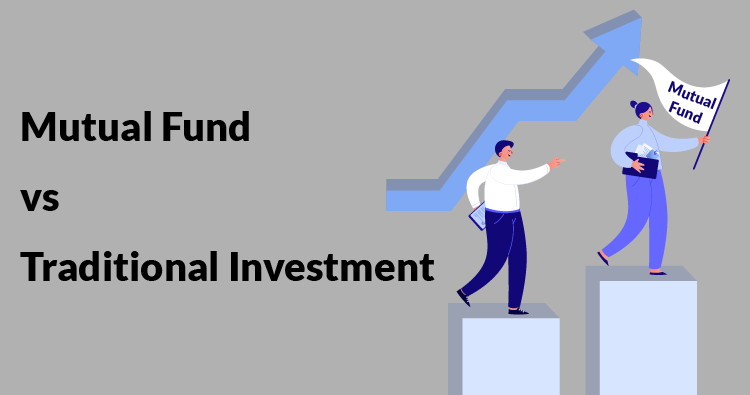
Mutual Funds VS Traditional Investing
Mutual Funds: Better option than traditionally investing in individual security.
Are you tired of the traditional investment options that seem to have limited returns? Looking for an alternative that can potentially provide higher returns while minimizing risk? Look no further! Mutual funds might just be the game-changer you’ve been waiting for. In this blog post, we will explore the world of mutual funds, understanding their benefits, and how they can revolutionize your investment strategy.
What are Mutual Funds?
Mutual funds are a type of investment vehicle that pools money from multiple investors to invest in a diversified portfolio of stocks, bonds, or other securities. They are managed by professional fund managers who use their expertise to identify the best investment opportunities. By investing in mutual funds, you essentially become a Unitholder/part owner in the fund, sharing its profits and losses.
Diversification: The Key to Reducing Risk
One of the primary advantages of mutual funds is diversification. When you invest in individual security, the fate of your investment hinges on the performance of a single company. If that company underperforms or faces financial difficulties, your investment will suffer. However, mutual funds invest in a wide range of securities across different industries, spreading the risk across multiple holdings. Diversification helps to reduce risk while potentially increasing returns.
Accessibility for Every Investor
Another significant advantage of mutual funds is their accessibility. Whether you are a seasoned investor or just starting, mutual funds provide options for every risk appetite and investment goal. You can choose from a variety of mutual fund types, each catering to different needs.
Professional Expertise at Your Fingertips
By investing in mutual funds, you gain access to the expertise of seasoned fund managers. These professionals spend their days analysing market trends, researching stocks, and identifying investment opportunities. Their experience and knowledge can be invaluable, especially for those who do not have the time or expertise to actively manage their investments.
Convenience and Flexibility
Investing in mutual funds offers unparalleled convenience and flexibility. Unlike in traditional way of investing in individual stocks or bonds, which often require substantial capital and continuous monitoring, mutual funds have a lower investment threshold. They also allow you to invest monthly through systematic investment plans (SIPs), enabling you to accumulate wealth gradually over time. This flexibility allows you to adapt your investment strategy based on market conditions or changing financial goals.
Taking Your Investment Strategy to the Next Level
Mutual funds have undoubtedly transformed the world of traditional investing. They offer diversification, accessibility, professional expertise, and unparalleled convenience. Whether you are a novice investor or a seasoned pro, mutual funds can enhance your investment strategy and potentially generate higher returns.
As with any investment, it’s important to carefully assess your financial goals and risk tolerance before diving in. Get ready to embrace the game-changing potential of mutual funds and watch your investments grow!
Mutual Fund investments are subject to market risks, read all scheme related documents carefully.
-

Myth or Reality? Revealing the Truths behind Investing in Mutual Funds
Myth or Reality? Revealing the Truths behind Investing in Mutual Funds
Welcome to our blog post that aims to debunk common myths and reveal the truths behind investing in mutual funds. Whether you’re new to the concept or a seasoned investor, we will address lingering doubts and provide valuable insights to help you understand the reality of mutual fund investing. So, let’s dive in and explore the fascinating world of mutual funds!
What are Mutual Funds?
Before addressing any misconceptions, let’s start with the basics. Mutual funds are investment vehicles that pool money from multiple investors to invest in a diversified portfolio of securities such as stocks, bonds, or a combination of both. Managed by professional fund managers, these funds offer individuals the opportunity to participate in the financial markets without the need for significant capital or expertise.
Myth 1: Mutual Funds Are Only for the Wealthy
Reality check: Mutual funds are accessible to investors of all income levels. Unlike traditional investment vehicles that may require substantial initial amounts, mutual funds allow individuals to invest with as little as a few hundred rupees. This low entry point makes it possible for anyone, regardless of their financial standing, to start building their investment portfolio.
Myth 2: Mutual Funds Are High-Risk Investments
Reality check: While all investments carry a certain degree of risk, it is a misconception that mutual funds are inherently high-risk. In fact, mutual funds provide diversification by spreading investments across various securities. This diversification helps mitigate risk by reducing the impact of any single investment’s performance. Additionally, investors can choose mutual funds with varying levels of risk, allowing them to align their investment strategy with their risk appetite.
Myth 3: Mutual Funds Means Only Invest in Equity
Reality Check: Mutual funds are a versatile investment vehicle that offers a wide range of investment options beyond just equity. There are numerous other categories of mutual funds that invest in various asset classes, making them suitable for a diverse set of investment objectives and risk tolerances. Investors can choose mutual funds that align with their objectives, whether it’s capital appreciation, income generation, or tax savings.
Myth 4: Mutual Funds Lack Transparency
Reality check: Transparency is a vital aspect of the mutual fund industry. Fund managers are required to disclose important information such as the fund’s investment objective, portfolio holdings, fees, and historical performance. This information is readily available to investors through fund prospectuses and annual reports. Furthermore, advancements in technology have made it easier than ever for investors to access real-time information about their mutual fund investments.
Myth 5: Mutual Funds Are Complex and Difficult to Understand
Reality check: While some mutual funds may have complex strategies associated with them, numerous funds are designed with simplicity in mind. Fund prospectuses and other educational materials provided by fund companies offer valuable information and insights to help investors understand the specific mutual funds they are interested in.
Conclusion
Now that we’ve debunked some common myths surrounding mutual funds, we hope you have gained a clearer understanding of the reality behind investing in this popular investment vehicle. Remember, mutual funds offer an accessible and diversified way to participate in the financial markets, allowing individuals from all walks of life to potentially grow their wealth over time.
Investing in mutual funds can be an exciting and rewarding journey. By dispelling these myths, we hope to empower you to take the next steps confidently and embark on your investment journey with mutual funds. Happy investing!
Mutual fund investments are subject to market risks, read all scheme related documents carefully.
-

How to build diversified portfolio with Mutual funds
Unlocking Wealth: Mastering the Art of Building a Well-Balanced Portfolio through mutual funds
Investing in mutual funds is an excellent way for individuals to diversify their investment portfolio and potentially earn higher returns. However, building a well-balanced mutual fund portfolio requires careful consideration and understanding of the various factors that can impact your investment success. In this blog post, we will guide you through the essential steps to help you create a resilient and profitable mutual fund portfolio.
Understanding Mutual Funds
Before diving into the intricacies of building a well-balanced mutual fund portfolio, let’s first understand what mutual funds are. A mutual fund is an investment vehicle that pools money from multiple investors and invests in a diversified portfolio of stocks, bonds, or other securities. This diversification helps spread risk and can potentially deliver more stable returns compared to individual stock investments.
Determine Your Investment Goals and Risk Tolerance
The first step in building a well-balanced mutual fund portfolio is to define your investment goals and assess your risk tolerance. Are you looking for long-term growth, income, or a combination of both? Understanding your investment objectives will help you select the right mutual funds that align with your goals.
Additionally, it is crucial to gauge your risk tolerance – how much volatility you are comfortable with. By investing in mutual funds suitable for your risk tolerance, you can avoid undue stress or panic during market downturns.
Diversify for Stability
Diversification is the cornerstone of building a robust mutual fund portfolio. Allocating your investments across various asset classes, sectors, and geographies can help reduce the impact of market fluctuations on your overall portfolio. A well-diversified portfolio typically includes a mix of equities, fixed-income securities, and possibly alternative investments.
Diversification is beneficial because different asset classes perform differently under various market conditions. By spreading your investments, you can mitigate potential losses and balance the risk across different investments.
Conclusion
By understanding your investment objectives, risk tolerance, and diversifying your investments across asset classes, you can create a resilient portfolio that can weather market fluctuations.
Remember to choose mutual funds that align with your goals, to ensure you are making informed decisions.
Investing in mutual funds can be both exciting and rewarding, but it’s essential to approach it with a long-term perspective and a well-thought-out investment strategy. With these steps in mind, you can embark on your journey towards building a well-balanced mutual fund portfolio that offers stability and growth.
You can contact us to know more about risk profiling and suitable mutual fund schemes for your investment journey.
This blog is purely for educational purposes and not to be treated as personal advice. Mutual funds are subject to market risks, read all scheme-related documents carefully. -
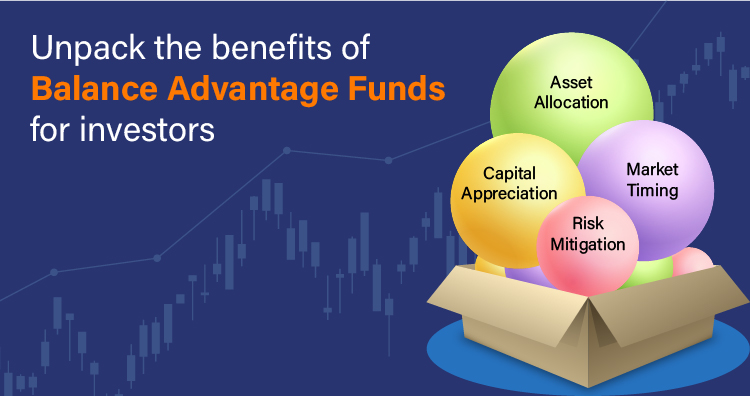
Unpacking the Benefits of Balance Advantage Funds for Investors
Unpacking the Benefits of Balance Advantage Funds for Investors
Investing in mutual funds can be a great way to grow your wealth and achieve your financial goals. However, many investors are often concerned about the risks associated with investing in the volatile stock market. If you’re looking to invest in mutual funds but also want to reduce your risk, then balance advantage funds might be the perfect option for you. In this blog post, we will delve into the benefits of balance advantage funds and why they are a smart choice for investors.
What are Balance Advantage Funds?
Balance advantage funds, also known as hybrid funds, are a type of mutual fund that provide a mix of both equity and debt instruments in their portfolio. These funds aim to achieve a balance between capital appreciation and stable income generation by dynamically managing the asset allocation based on market conditions.
The Benefits of Balance Advantage Funds
1. Risk Mitigation
One of the key advantages of balance advantage funds is that they offer a built-in risk mitigation strategy. By diversifying the portfolio between equities and debt instruments, these funds aim to reduce the impact of market volatility on your investment. During periods of high market uncertainty, the fund manager can shift the allocation towards debt instruments, providing stability to your investment.
2. Capital Appreciation
While balance advantage funds focus on reducing risk, they also aim to generate capital appreciation over the long term. By investing in equities, which have the potential to deliver higher returns, these funds offer the opportunity for your investment to grow and outpace inflation. The combination of equity and debt instruments in the portfolio helps in achieving a balance between growth and stability.
3. Rebalancing based on Valuation parameters
Most balanced advantage funds rebalance their portfolio by increasing equity exposure when market valuations are low and reducing equity exposure when market valuations are high.
For example, If an BAF is following PE (Price-to-Earnings) Ratio: When the PE ratio of broader market is high, it suggests stock market is costly, so fund managers put more of your money in safer investments like debt fund. Conversely, when the PE ratio is low, it indicates stock market is more affordable, and fund managers may allocate a larger portion of your portfolio to stocks.
Some funds may follow the PB (Price to book) Model by comparing historical PB ratio of broader market to decide whether the market is costly or cheaper to decide the ideal asset allocation between Equity and Debt.
4. Market Timing
Balanced Advantage Funds change their investments in response to how the stock market is doing. If fund managers think the market is not looking good based on valuation matrix, fund managers might put less money into stocks and more into safer options like bonds or cash. This helps protect your money when the stock market isn’t doing well and could potentially lead to better returns.
Conclusion
Balance advantage funds provide a wide range of benefits for investors. Their ability to dynamically manage asset allocation, mitigate risk, and generate capital appreciation makes them an attractive option for those looking to invest in mutual funds with reduced risk. The professional management and convenience they offer further enhance the investment experience.
Understanding your investment goals, risk tolerance, and time horizon will help you make an informed decision. Investing in balance advantage funds can be a strategic step towards building a diversified investment portfolio while minimizing risk. By leveraging the benefits of these funds, you can take an important step towards achieving your long-term financial goals.
Mutual Fund investments are subject to market risks, read all scheme related documents carefully.
-

Sustainable development is the future. Do you know how you can be a part of it?
Sustainable development is the future. Do you know how you can be a part of it?
India is witnessing the highest rise in carbon emissions as per COP27, which is a great concern for the government and the citizens. However, the positive thing is that people are also becoming aware and responsible for environmental conditions. However, to achieve the Net Zero target by 2050, the amount of investments required is one of the biggest concerns. Here comes the opportunity for investors looking to invest responsibly and for a sustainable future. In this article, you will find how you can be a part of this change and meet your investment goals.
Sustainable investment is the way
Now, if you have heard of sustainable investments, you may have heard about ESG, so what does this mean? Sustainable investment has been gaining importance globally and in India with the rising concerns of climatic changes. This is an investment approach that is focused on earning higher returns or lowering the risks involved but also considers the investment’s effect on the environment and society.
ESG stands for environment, social and governance which are the three pillars of sustainable development. These three criteria help in deciding how to approach sustainable investment, which is recognized internationally.
How to invest sustainably?
ESG being the pillar of sustainable investments, ESG funds are the easiest way to invest responsibly and generate competitive returns over time. There has been a 5 times rise in the assets of ESG funds in the last 4 years, and the total AUM of ESG funds has crossed Rs.12450 crores mark.
ESG funds are mutual funds that invest the pooled capital from different investors into assets of companies that are performing well or meeting the ESG criteria set for the businesses. Stocks and bonds are the main constituents of ESG funds, which are companies that operate sustainably.
You can buy ESG funds like any other mutual funds from mutual fund houses and online platforms. However, while investing in ESG funds, you need to check whether the fund invests in companies with high ESG scores.
Suppose you are thinking about investing in direct equities of companies complying with ESG requirements. In that case, you need to check whether the company’s products and services are eco-friendly. Moreover, you need to check whether the business has a positive social impact and whether they have proven corporate governance policies and ethics. While these are related to the ESG aspect, you should also consider the return and risk profile as well for fruitful investments. Compare the average return generated by the sector with the fund’s return, and also don’t forget to check the expense ratio.
While investing in ESG funds or companies operating as per ESG norms is the primary way to invest for a sustainable future, you should also avoid investing in companies with high carbon footprints or emitting a high carbon level due to their operations.
Benefits of investing in ESG funds for the future
- The first reason to invest in these funds has to be your attitude towards sustainable development. However, that doesn’t mean your investments will suffer. It has been observed that ESG investments perform better than traditional investments during a market downturn.
- Half of the world’s GDP, which will be close to US$ 44 trillion, is dependent on Mother Nature, such as agriculture, forests and other natural sources. Thus, by investing in ESG funds, you can add to the huge requirement for investments.
Outlook for India
In India, ESG investing is still in its early stages. However, there is an exceptional growth prospect for the sector. In the past year, the category average of ESG funds offered a negative return of 2.3%; however, in the last 2 years, the category average has been 21.78%, higher than many traditional investment vehicles. Another report suggests that while the average percentage of ESG-linked bonds in emerging markets is around 10.5%, and 25% in China, in India, it is only 0.7% at present, there is a huge room for growth.
So, if you are concerned about the environment and want to invest in a sustainable future, this is the time.
This blog is purely for educational purposes and not to be treated as personal advice. Mutual funds are subject to market risks, read all scheme-related documents carefully.
-

Why Mutual Fund Investors Should Not Stop SIP
Why Mutual Fund Investors Shouldn’t Stop SIPs In This Economic Slowdown
With the looming recession fears, many investors are pausing their SIPs. It has also been historically observed that investors tend to stop their SIP investments during an economic slowdown. However, if you look at the mutual fund returns from 2008 till now, a recession can be the best time to invest in the market. So, if you are thinking about stopping or pausing SIPs for a while, you need to read this article.
How can SIPs help in a recession?
Recession is never welcomed. However, if you are investing in mutual funds via SIPs, an economic slowdown can be a boon for you. The most important aspect of investing via SIPs is rupee cost averaging. This term refers to investing practice that involves investing an equal sum on a particular date without worrying about the fund’s unit price. This is when you do not try to time the market but regularly invest a certain sum of money and stay invested for a longer time to reap the benefits.
To understand this better, let’s look at how rupee cost averaging works:
Months Amount invested Per unit price Number of units bought 15th January Rs. 10000 100 100 15th February Rs. 10000 95 105.26 15th March Rs. 10000 90 111.11 15th April Rs. 10000 85 117.65 15th June Rs. 10000 89 112.36 15th July Rs. 10000 92 108.70 Suppose you started investing in this (say) fund A in January, and the date of SIP investment you set is the 15th of every month. However, due to the recession, markets started to tank, and unit prices kept going down, then they started to revive in the 5th month, June. Now, take a close look at the number of units you get when the price goes down. As the price went down from Rs. 100 per unit to Rs. 95 per unit, the number of units received went up from 100 to 105.26. This example depicts the benefit of staying invested even when the economy slows down. As a SIP investor, when the prices go down, you should stay invested rather than pause your SIPs, as you will get more units than when the prices are soaring.
Now let’s compare it with lump sum investment to understand another benefit of SIP: risk mitigation. The total sum invested in the six months is Rs. 60000 divided into equal parts over 6 months. Now, if you had invested this total amount on 15th January, the total number of units you would have received was Rs. 60000/100 = 600 units.
At the end of the 6th month, you have a total of 655.08 units, as you invested via SIPs. So, you achieved a clear profit of 55.05 units just by breaking down your investment into small parts. This also reduced the risk to quite an extent, as you didn’t put all the money in the fund immediately.
Why do you stay invested for the long term while investing via SIPs?
Now you know why you shouldn’t stop investing during the economic slowdown, so next, let’s find out why you should stay invested for a longer tenure to reap better returns.
Suppose you and your friend started investing in the same fund, say, Fund X, on the same date and the same amount of Rs. 10000 every month. However, you stopped the SIP after five years due to the recession, while your friend continued it for ten years. Now let’s take a look at the returns:
Particulars You (5 years investment) Your friend (10 years investment) Total Investment Rs. 600000 Rs. 1200000 Returns (@12% rate) Rs. 224864 Rs. 1123391 Total value Rs. 824864 Rs. 2323391 The returns and total value of your friend who stayed invested for ten years are higher than yours. You may say that you invested half of your friend, which is true. However, you haven’t achieved half of the returns generated by your friend while you have invested half of what he did. This is due to the computing of returns which helps in the growth of the returns when you stay invested for a longer tenure.
Conclusion
While the recession is something to worry about, if you plan your investments thoroughly and stay invested and regularly monitor the investments, recession can also benefit you in the long term.
This blog is purely for educational purposes and not to be treated as personal advice. Mutual funds are subject to market risks, read all scheme-related documents carefully.
-

Don’t Leave Your Family’s Future to Chance: The Importance of Having a Will
Don’t Leave Your Family’s Future to Chance: The Importance of Having a Will
Imagine you have worked hard throughout your life for your family so that they can benefit from your hard work, but due to not clarifying which part of your estate will go to whom, there is a clash among your family members. Now, no one is utilizing your estate because of legal disputes.
You never want that, right? But how can you protect your family from these disputes in your absence? There is a simple answer for the same, write a will.
What is a will?
A will is a legal document that indicates a clear direction to the beneficiaries of your wealth’s ownership in the case of your demise. It includes how you want your assets distributed and the methods used.
There are mainly five reasons why you must have a will:
Avoid disputes
Your sudden demise might also leave your beneficiaries in shock and financial confusion. So that no beneficiary gets unjustified assets, creating a will mentioning each and every detail will help your beneficiaries save time, legal proceedings, a clear sense of responsibility, and asset ownership.
Take care of your minor children
Creating a will helps you nominate guardians for your minor children who will take care of them in the case of your unfortunate and sudden demise. A guardian will be responsible for your children’s needs, like clothing, education, food, housing, and healthcare. If you do not create a will and do not nominate a guardian for your minor children, the court will have to do it for the same. This will take a lot of time, and your children might get mentally and emotionally disturbed if not given proper care.
Assets management
After your demise, someone must take care of your bank accounts, liquidate assets if required, business-related operations (if you have one), and your real estate. You should choose a person who is capable of handling all the financial operations after your demise so that your loved ones can get the best out of it. You need a person whom you can trust when it comes to finances.
If you do not create a will directing a person you trust, the court will have to do so on your behalf, and the person you like might not get selected or not be the right person for the good of your loved ones.
Expensive court process
As we all know, court processes are time-consuming and expensive, and it might get tiring for your family to get what you have built for them when you are alive in the absence of a will. Due to long-lasting legal proceedings, your family might become out of money and make wrong financial decisions. To prevent such a situation, you must create a will.
Protect your digital assets
In this digital era, you also need to take care of your digital assets so that no one can misuse the personal information contained therein. In the absence of a will, the court will give liberty to the person to take care of digital assets as well. Such a person might misuse your data for their own personal gain. If you create a will, it will become much more helpful for you to protect your personal and business-related information as well by directing a person to utilize your digital assets in a particular way.
Maintain healthy cause
Some of you might dream of leaving some portion of your assets for a good cause or charity. If you sincerely want to do something for society by contributing to charity, it becomes necessary to create a will. If you do not have a will, no one would know what you actually want to do with your estate. Even if someone knows, why would they tell the court to do the same?
Creating a will is a financial planning component; if you think it is only for rich people to pursue, you might be wrong. Family disputes for even a small estate might lead to cause long-lasting conflicts among family members.
-

Mutual Fund Terms You Need to Know
Mutual Fund Terms You Need to Know
Are you confused by the jargon used in mutual funds and unsure how to navigate investing in them? Mutual funds can be an ideal investment option for those seeking a diversified portfolio without having to purchase and manage individual securities. Still, it is important to understand the different terms that may confuse new investors. In this article, we will discuss the definition of key terms associated with mutual funds, so you can make informed decisions when investing and build a more stable investment portfolio over time.
- AMC – Asset Management Company
An AMC is a financial institution that manages and invests funds on behalf of clients such as individuals, corporations, and other institutions. The clients entrust their funds to the AMC, which then invests the money in various financial products, such as stocks, bonds, and other securities, to fulfill the fund’s investment objectives.
SEBI regulates AMCs and must comply with strict rules and regulations related to their operations, disclosures, and transparency. The main goal of an AMC is to generate returns for its clients while minimizing risk and providing them with professional investment management services.
- NAV – Net Asset Value
It is a common mutual fund term that refers to the price of each unit of a mutual fund. Just like stocks have a share price, mutual funds have NAV. For example, if you purchase 100 mutual fund units, you must purchase them at the NAV.
The NAV of a mutual fund represents the total value of the fund’s portfolio divided by the number of shares outstanding. It is calculated at the end of the trading day.
NAV is the indicator of the fund’s performance over a period. If you track the NAV of a fund for a certain period, you can gauge the fund’s performance and likewise make an informed decision.
- SIP – Systematic Investment Plan
SIP is a popular and effective method of investing in mutual funds. Investors make regular and periodic investments in a fund over a period instead of investing a lump sum amount in one go.
Under a SIP, an investor agrees to invest a fixed amount at regular intervals, usually weekly, monthly, or quarterly, in a chosen mutual fund scheme. The invested amount is deducted automatically from the investor’s bank account on a specified date every month. The units are allocated at the scheme’s prevailing Net Asset Value (NAV) on that day. This way, the investor can invest in a disciplined manner, regardless of market conditions.
SIPs are considered a convenient and affordable way to invest in mutual funds, as they allow investors to start with a small amount, as low as Rs. 500. This makes mutual fund investments accessible to a wider range of people who may not have large sums of money to invest in one go.
- STP – Systematic Transfer Plan
STP is an investment strategy used in mutual funds that gives you the facility to use funds in a disciplined manner. An STP is useful when an investor wants to move funds from a more volatile fund to a less risky fund or vice versa. For example, an investor may want to transfer funds from an equity fund to a debt fund over a period to reduce the risk in the portfolio.
Under an STP, the investor specifies the amount to be transferred, the frequency of the transfer, and the mutual fund schemes involved. The transfer is usually done automatically from the redemption proceeds of the source scheme to the purchase of units in the target scheme.
STPs can be customized according to the investor’s needs and preferences, and most mutual fund companies offer them.
- SWP – Systematic Withdrawal Plan
SWP allows investors to withdraw a fixed amount from a mutual fund scheme over a period. This is a helpful strategy for those who want to generate regular income from their mutual fund investments or those who need to manage their cash flow. The SWP can be set up for a specific period or an ongoing process until the investor stops it.
Investors also use this as a source of regular income after retirement. It can be customized according to the investor’s needs and preferences and is offered by most mutual fund companies.
- AUM – Asset Under Management
AUM is an important metric for investment companies, as it indicates the size and scale of their business. It is a financial term that refers to the total market value of the assets an investment company or financial institution manages on behalf of its clients. The higher the AUM, the more assets the company manages on behalf of its clients and the more revenue it generates through management fees.
AUM is also a key performance indicator for investors, as a fund with a higher AUM also signals that investors in large numbers are investing in the fund. This is especially true for equity funds, as individual investors typically invest in these funds.
- Expense ratio
The cost of owning a fund over a year is expressed as an expense ratio. It covers expenses related to managing the fund, promotion, advertising, and other related expenses. The market regulator has specified a range of expense ratios that funds of different categories can charge from their investors.
This blog is purely for educational purposes and not to be treated as personal advice. Mutual funds are subject to market risks, read all scheme-related documents carefully. -

A guide to understanding annuities
Are Annuity Plans Right for You? A Guide to Understanding Annuities
Annuities are an attractive option for retirees seeking a reliable source of income. However, before making any decisions, it is important to understand what annuities are and how they work.
Annuity plans, also known as annuities, are periodic payments or payouts made to policyholders from the accumulated corpus. These are a kind of regular income to provide financial assistance during old age.
With money accumulated from policyholders either in installments or lump sums, annuities allow you to plan for retirement needs in advance.
Whether your other assets are depleted, or you don’t have a ready source of income to survive post-retirement years, annuity plans come to the rescue. Withdrawals from such plans can only be made only after certain periods.
So, it is an agreement between investors and insurance companies wherein investors pay premiums in exchange for regular payments after the policy ends.
How do annuity plans work?
The working of annuity plans is simple. Let’s understand how they work in brief.
- For annuity plans to work, you are required to invest money either in installments or lump sum to build a corpus towards the annuity plan.
- The annuity will ensure that you consistently get a certain income on a future date. The payment/income can be monthly, quarterly, half-yearly, or yearly, depending on the type of annuity plan.
- Your pension or income depends on several factors, such as the policy’s tenure, policy type, corpus accumulated, etc.
- It is your wish if you wish to get annuity payments for a fixed period i.e. 15 years, 20 years, etc., or for a lifetime.
- The period in which you make payments towards the policy is known as the accumulation phase. Here, on a tax-deferred basis, the amount you invest towards an annuity grows.
- And once your payments or income begins, it is known as the annuitization phase.
- Income will depend on whether you choose a fixed annuity plan or a variable plan.
Types of annuities
Based on several factors, annuities are categorized into different types. Let’s have a look at them and their structure.
- Immediate annuity plans: Such plans have no accumulation phase, meaning the premium is paid in a single go. You will start receiving the guaranteed income almost immediately. It is best suited for people on the verge of retirement and needing immediate income.
- Deferred annuity: In this plan, there is a long gap between the accumulation and annuitization phases. Since there is a huge gap, payouts usually start at a future date.
- Fixed annuity plans: Such plans are best suited for individuals who have low-risk tolerance but still want decent returns. These plans guarantee buyers to pay a fixed rate of return on the money they invest for specific periods. The guaranteed sum of money post-retirement is ensured.
- Variable annuity: It is quite the opposite of the previous one. Variable annuity plans do not ensure to payment of a fixed sum of money to investors. A certain amount is paid to you based on your preferred investment’s performance. In this, you have a choice to select your preferred investment option among others.
- Lump-sum annuity plans: You’ll see most annuity plans pay a certain sum of money at regular intervals. However, a few of the plans offer you a lump sum amount on maturity. But you must note that you can avail of this benefit only after a specific time.
Tax Benefits and Implications on Annuity in India
Contributions made during the accumulation stage of a delayed annuity plan are eligible for tax deductions under Section 80CCC, up to a maximum of Rs 1.5 lakh per fiscal year. Section 10(10A) allows for the tax-free withdrawal of up to one-third of the corpus at the moment of vesting.
The remaining amount is paid out as an annuity as the annuity is a form of income, which is treated as income and taxed accordingly.
This blog is purely for educational purposes and not to be treated as personal advice. Mutual funds are subject to market risks, read all scheme-related documents carefully.